

(720) 414-6965
Call for a free consultation
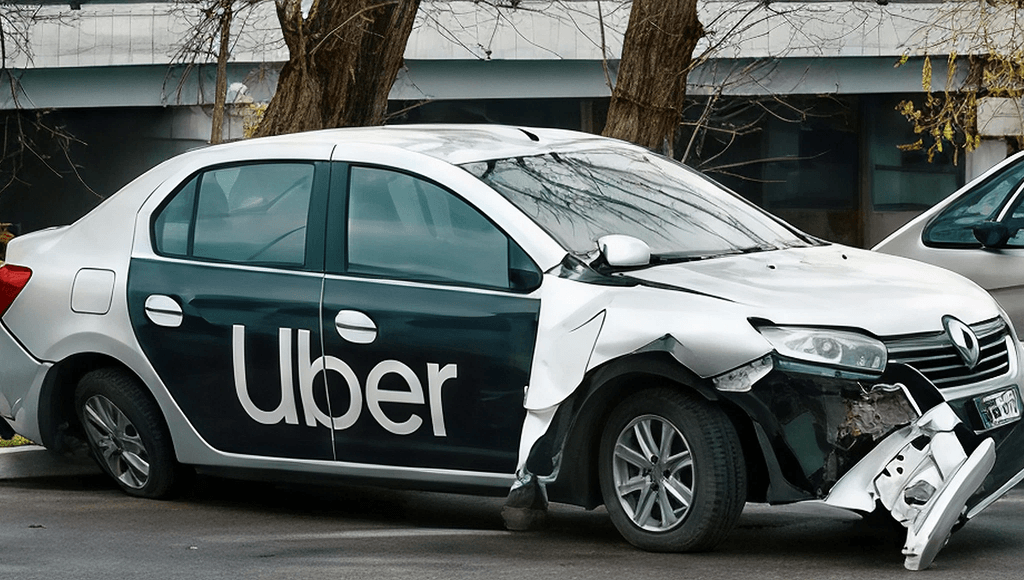
Rideshare services such as Uber and Lyft are widely used throughout Denver. While these platforms provide convenience and accessibility, accidents involving rideshare vehicles can create complex legal and insurance issues. Determining who is responsible and which insurance policy applies is often far more complicated than in a typical car accident.
If you were injured in a crash involving an Uber or Lyft vehicle, consulting an experienced Denver rideshare accident attorney is essential. At Walker Law LLC, Denver rideshare accident attorney Jason Walker represents passengers, drivers, pedestrians, and other motorists throughout Denver and across Colorado who have been injured in rideshare-related collisions.
Whether you were a passenger in an Uber in downtown Denver, struck by a Lyft driver at an intersection, or injured while driving your own vehicle, you may have the right to file a Denver rideshare accident claim. A skilled Denver Lyft accident attorney investigates the crash, identifies all available insurance policies, and builds a case designed to withstand corporate defense tactics.
Rideshare accident cases in Denver often involve multiple insurers, competing coverage arguments, and significant injury claims. Strong legal representation helps ensure that your rights are protected from the outset.
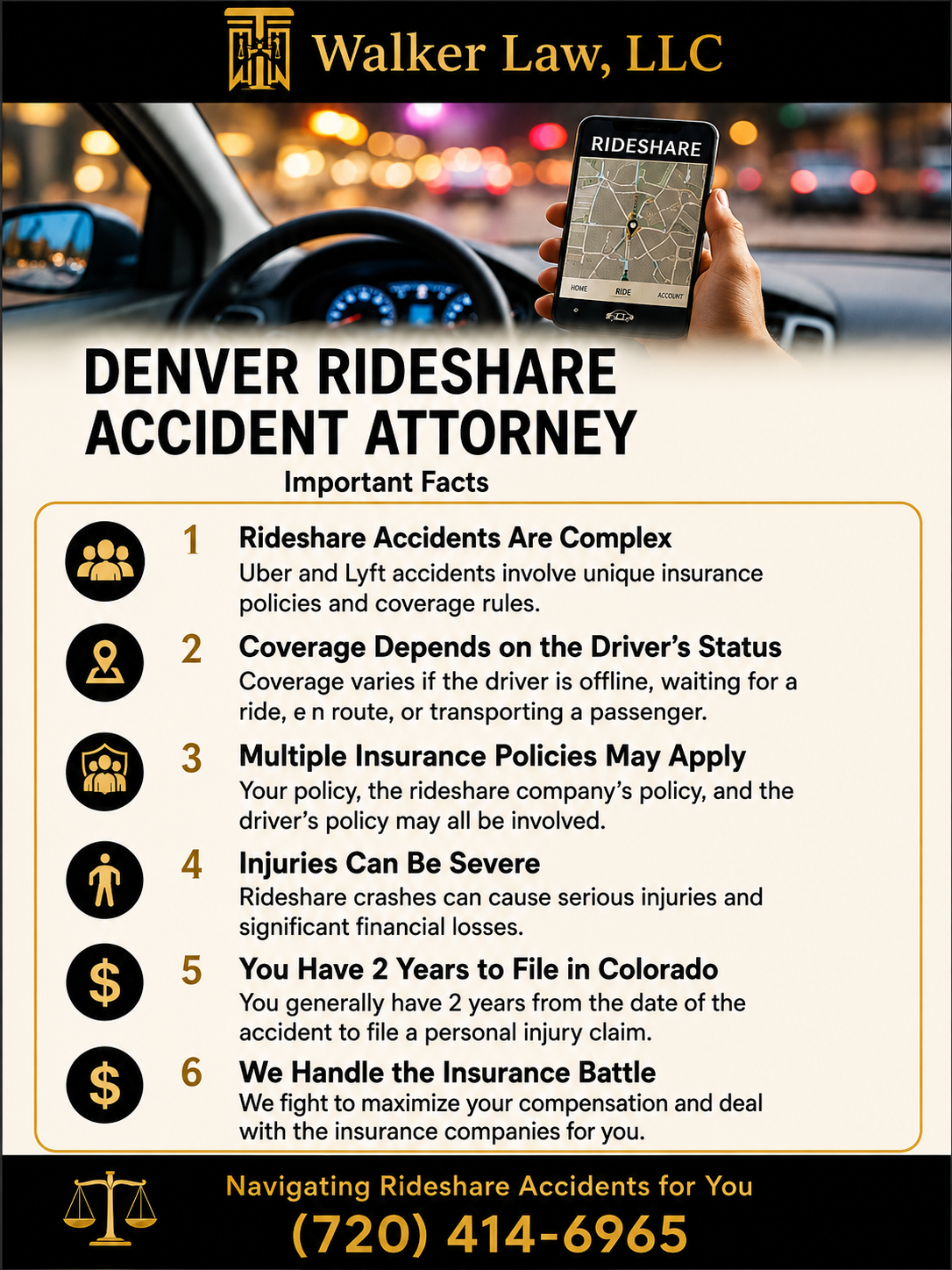
Rideshare accidents in Denver differ from ordinary motor vehicle collisions because multiple layers of insurance coverage may apply. The availability of coverage often depends on the driver’s status within the Uber or Lyft app at the time of the crash.
A seasoned Denver rideshare accident lawyer understands that liability in these cases may involve:
In Denver, rideshare drivers move through different “periods” of activity:
Each phase can trigger different insurance coverage limits under Colorado law and company policies.
For example, if an Uber driver in Denver causes a crash while actively transporting a passenger, a substantial commercial liability policy may apply. If the driver is logged into the app but has not yet accepted a ride, coverage limits may differ.
Insurance companies often dispute which policy applies. They may argue that the driver was not officially engaged in rideshare activity at the time of the accident. A knowledgeable Denver Uber accident attorney gathers digital records, trip data, and app activity logs to establish the driver’s status.
Because these disputes can significantly affect compensation, early involvement of a Denver rideshare accident attorney is critical. Prompt investigation ensures that key electronic evidence is preserved and that coverage arguments are addressed strategically.
Insurance coverage is the central issue in most Denver rideshare accident cases. Unlike traditional motor vehicle collisions, Uber and Lyft accidents involve layered insurance policies that change depending on the driver’s activity within the app.
A knowledgeable Denver rideshare accident attorney evaluates which coverage period applies under Colorado law.
If the rideshare driver’s app is turned off, the driver is treated like any other private motorist in Denver. Only the driver’s personal auto insurance policy applies.
When a driver in Denver is logged into the Uber or Lyft app but has not yet accepted a ride, limited contingent liability coverage may apply through the rideshare company. This coverage is typically lower than the policy available during an active trip.
Insurance disputes often arise during this phase. Carriers may argue over whether the driver was actively available for rides at the time of the crash. A skilled Denver Uber accident attorney obtains electronic app data and trip records to establish coverage eligibility.
Once a ride has been accepted and the driver is on the way to pick up a passenger in Denver, a higher level of commercial liability coverage generally becomes available.
When a passenger is inside the rideshare vehicle, Uber and Lyft typically provide substantial liability coverage. This period often offers the strongest financial protection for injured parties in Denver.
A Denver Lyft accident attorney must determine:
Because insurance companies in Denver may attempt to shift responsibility between personal and commercial carriers, detailed investigation is critical. A Colorado rideshare accident attorney ensures that all potential coverage sources are identified and pursued.
Rideshare drivers face unique pressures that can contribute to collisions in Denver. Navigating unfamiliar streets, relying heavily on navigation apps, and attempting to complete frequent trips may increase distraction and fatigue.
Common causes of Uber and Lyft accidents in Denver include:
In many Denver rideshare accident claims, more than one party may share responsibility. For example, another negligent driver may have caused the crash while the rideshare vehicle was transporting a passenger.
A seasoned Denver rideshare accident lawyer evaluates all potential causes and identifies every liable party. Accident reconstruction, dash camera footage, trip data, and eyewitness testimony often play crucial roles in determining fault.
Because rideshare companies maintain digital records of trip activity, prompt legal action by a Denver rideshare accident attorney helps preserve critical electronic evidence before it is deleted or overwritten.
Rideshare accidents in Denver can affect multiple types of victims. A knowledgeable Denver rideshare accident attorney evaluates the specific circumstances of the crash to determine who has the right to pursue compensation under Colorado law.
Individuals who may file a Denver rideshare accident claim include:
Because coverage varies depending on the driver’s app status, determining eligibility for compensation can be complex. A skilled Denver Uber accident attorney reviews trip logs, app data, and insurance policies to identify all available sources of recovery.
In some Denver rideshare accident cases, multiple insurance policies may apply. For example:
A seasoned Denver Lyft accident attorney ensures that no coverage avenue is overlooked. Early investigation is particularly important when coverage disputes arise between insurers.
Colorado law imposes strict deadlines for filing personal injury claims. Consulting a Denver rideshare accident lawyer promptly helps preserve your right to pursue compensation.

Although rideshare vehicles are standard passenger cars, the injuries resulting from Uber and Lyft accidents in Denver can be serious. High traffic density, distracted driving, and urban congestion increase the risk of significant harm.
Common injuries in Denver rideshare accident cases include:
Passengers may be particularly vulnerable if they are seated in the rear without anticipating impact. A knowledgeable Denver rideshare accident attorney works with medical professionals to fully document the extent of injuries and project future treatment needs.
In cases involving catastrophic harm, coordination with a Denver catastrophic injury attorney may be necessary to assess long-term medical costs, loss of earning capacity, and permanent disability.
Insurance companies often attempt to minimize injury claims. A skilled Denver Uber accident lawyer builds a comprehensive case supported by medical records, expert testimony, and detailed financial analysis.
Determining fault in a rideshare accident requires careful investigation. A seasoned Denver rideshare accident attorney must identify not only who caused the crash, but also which insurance coverage applies under Colorado law.
To establish liability in a Denver rideshare accident claim, it is generally necessary to prove:
Evidence commonly used in Denver Uber and Lyft accident cases includes:
Because rideshare companies maintain detailed electronic records, a knowledgeable Denver Uber accident attorney moves quickly to preserve digital evidence. App status, ride acceptance times, and passenger trip data may be crucial in proving coverage and liability.
Colorado follows a modified comparative negligence rule. If an injured party in Denver is found 50 percent or more at fault, recovery may be barred. Even partial fault can reduce compensation. Insurance companies frequently attempt to shift blame to other drivers or even to passengers.
In some cases, multiple parties may share responsibility. For example:
A skilled Denver rideshare accident lawyer conducts a comprehensive investigation to ensure that every responsible party is identified. Thorough preparation strengthens both settlement negotiations and potential litigation in Denver courts.
Rideshare accidents can result in substantial physical, emotional, and financial losses. A knowledgeable Denver rideshare accident attorney evaluates all categories of damages to pursue full compensation under Colorado law.
Depending on the circumstances, a Denver rideshare accident claim may include compensation for:
Because Uber and Lyft accidents in Denver may involve high-limit commercial policies, the potential recovery in serious injury cases can be significant. However, insurers often contest liability, minimize injuries, or dispute coverage periods.
A skilled Denver Lyft accident attorney works with medical experts, vocational specialists, and financial professionals to accurately calculate both immediate and future damages.
Colorado law imposes time limits for filing personal injury claims. Consulting a Denver rideshare accident lawyer promptly helps ensure that your rights are preserved.
Tragically, some rideshare accidents in Denver result in fatal injuries. Surviving family members may face both emotional devastation and financial hardship.
A compassionate Denver rideshare accident attorney can help families pursue wrongful death claims under Colorado law.
In fatal Uber or Lyft accident cases in Denver, eligible family members may seek compensation for:
Fatal rideshare accidents may involve:
Because coverage issues in rideshare cases can be complex, a Denver wrongful death attorney must carefully analyze insurance policies and app activity to determine which entity is financially responsible.
Colorado’s wrongful death statute imposes specific procedural requirements and deadlines. Prompt consultation with a Denver rideshare accident lawyer helps preserve critical evidence and protect the family’s legal rights.
Although no legal action can reverse the loss of a loved one, pursuing accountability can provide financial stability and a sense of justice.
Rideshare accident claims require detailed knowledge of insurance structures, digital evidence, and Colorado liability law. Choosing the right Denver rideshare accident attorney can significantly influence the outcome of your case.
Jason Walker offers important advantages to injured clients in Denver:
Rideshare companies and their insurers are sophisticated entities with substantial legal resources. Injured victims in Denver deserve experienced representation prepared to negotiate aggressively and proceed to trial when necessary.
Walker Law LLC represents clients throughout Denver and across Colorado in Uber and Lyft accident cases with disciplined strategy and professional advocacy.
If you or a loved one has been injured in an Uber or Lyft accident in Denver or the surrounding metro area, you may have the right to pursue compensation under Colorado law. Acting promptly helps preserve electronic records and protect your claim.
Walker Law LLC offers free consultations to injured victims throughout Denver and across Colorado. During your consultation, a Denver rideshare accident attorney will review the details of your crash, explain your legal options, and outline the next steps.
To speak with an experienced Denver Uber or Lyft accident lawyer, call Walker Law LLC at (720) 414-6965 or contact our firm online to schedule your consultation.
Protect your rights with a trusted Denver rideshare accident attorney committed to advocating for clients throughout Colorado.
Reviewed for legal accuracy by Jason Walker on September 22, 2026
Evidence should be preserved quickly because rideshare companies and drivers may possess important digital records that are not available to the public. Useful materials may include screenshots of the trip, driver information, ride receipts, app messages, photographs, medical records, witness details, and insurance correspondence. An attorney may also request GPS data, trip logs, vehicle records, dash camera footage, phone information, and company communications. These records can help establish who caused the rideshare accident and which insurance policies apply. Prompt preservation is particularly important in a Denver case because electronic information may be deleted or overwritten.
A rideshare passenger is rarely responsible for the driving decisions that cause a collision, but every case must be evaluated individually. The claim may involve negligence by the rideshare driver, another motorist, a vehicle owner, or more than one party. An attorney can examine police records, witness statements, video footage, vehicle data, and app information to determine responsibility. The passenger may have claims under the driver’s policy, the rideshare company’s insurance, or another motorist’s coverage. Identifying every responsible party can improve the passenger’s ability to recover compensation after a Colorado rideshare accident.
A personal automobile insurer may deny coverage when a vehicle was being used for commercial rideshare activity at the time of the crash. The next step is often determining whether insurance maintained by the rideshare company applies based on the driver’s app status. Other sources may include another driver’s liability policy and applicable uninsured or underinsured motorist coverage. A Denver attorney can review policy language, trip records, denial letters, and company insurance documents to resolve competing coverage positions. This analysis can prevent an injured person from accepting an insurer’s denial without investigating all available Colorado coverage.
Responsibility for a rideshare accident depends on how the collision occurred and who was at fault. The rideshare driver, another motorist, or multiple parties may share liability depending on the circumstances. Insurance coverage can also vary based on whether the driver was waiting for a ride request, traveling to a passenger, or actively transporting a rider. Determining which insurance policy applies often requires a detailed review of the facts. An attorney can investigate the accident and identify all available sources of compensation.
Yes, injured passengers may have the right to pursue compensation regardless of which driver caused the accident. Depending on the circumstances, claims may involve the rideshare company's insurance policy or another driver's insurer. Medical expenses, lost income, and pain and suffering may all be considered when seeking compensation. Prompt medical treatment and proper documentation can strengthen a passenger's claim. An attorney can explain your legal options based on the details of the accident.
Yes, the driver's status within the Uber or Lyft app can significantly affect which insurance policy applies after an accident. Different coverage may be available depending on whether the driver was offline, waiting for a ride request, traveling to pick up a passenger, or actively transporting one. Trip records, app data, and company logs may help establish the driver's status at the time of the collision. Determining this information early can be important when multiple insurance companies dispute responsibility for the claim. A Denver rideshare accident attorney can obtain the necessary records and evaluate how the driver's app status affects coverage under Colorado law.
In 2026, the available uninsured motorist coverage may depend on whether the rideshare driver was offline, waiting for a request, traveling to collect a passenger, or completing a prearranged ride. Colorado requires transportation network companies or their drivers to maintain specified uninsured motorist protection while a prearranged ride is underway. The law provides at least $200,000 per person and $400,000 per occurrence for that covered period. Additional coverage may come from the injured person’s own policy or another applicable household policy, subject to policy language and Colorado law. A Denver rideshare accident attorney can obtain the app-status records and insurance documents needed to identify the coverage available in 2026.
Legal guidance should be obtained promptly because app records, trip data, surveillance video, electronic vehicle information, and witness evidence may not remain available indefinitely. Early involvement allows an attorney to preserve evidence, identify the driver’s status, and notify every potentially responsible insurer. It also provides time to document medical expenses, lost income, future treatment, pain, disability, and other losses. Waiting may weaken the claim and create problems with Colorado filing deadlines. To discuss the collision and the available insurance coverage, reach out to us about your Denver rideshare accident case.