

(720) 414-6965
Call for a free consultation
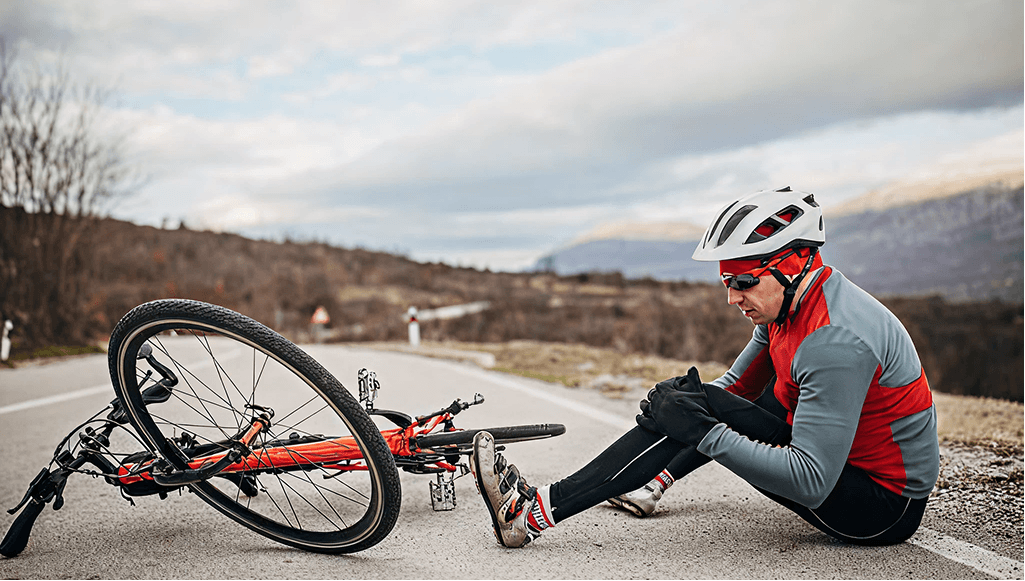
If you were injured in a crash, speaking with an experienced Denver bicycle accident attorney is critical. At Walker Law LLC, Denver bicycle accident attorney Jason Walker represents injured cyclists throughout Denver and across Colorado who have been harmed by negligent motorists.
Bicycle accident cases differ from standard car accident claims. Cyclists have little physical protection and are often vulnerable to catastrophic injuries. Insurance companies may also attempt to argue that the cyclist contributed to the crash. A knowledgeable Denver bicycle accident lawyer understands Colorado traffic laws governing bicycles and how to build a strong case.
Whether your accident occurred in a designated bike lane, at an intersection, on a residential street, or along a busy Denver roadway, you may have the right to pursue compensation. A skilled Denver cyclist injury lawyer investigates the collision, preserves evidence, and advocates for full recovery under Colorado law.
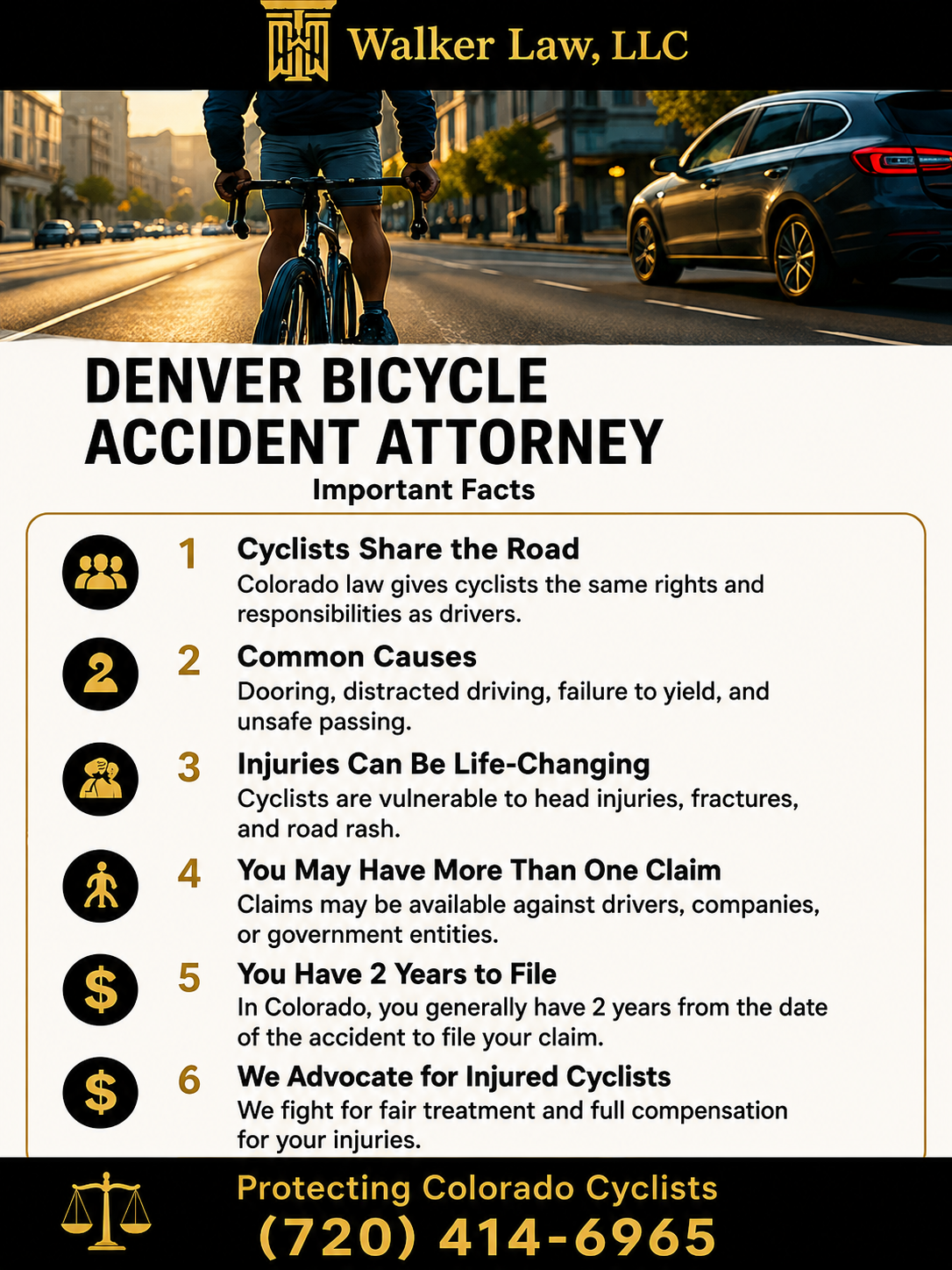
Cyclists in Denver have the same legal rights as drivers. When those rights are violated, a dedicated Denver bicycle accident attorney works to hold negligent parties accountable.
Bicycle accidents in Denver frequently result in severe injuries because cyclists lack the protection provided by enclosed vehicles. Even at relatively low speeds, a collision between a motor vehicle and a bicycle can cause life-altering harm.
Several factors contribute to the severity of bike accidents in Denver:
As Denver continues to promote cycling infrastructure, interactions between vehicles and bicycles increase. Colorado law requires drivers to exercise due care when passing or approaching cyclists.
Because injuries in Denver bicycle accidents are often serious, claims handled by a Denver bicycle accident attorney frequently involve significant medical expenses and long-term recovery. Insurance carriers may aggressively dispute fault or minimize injuries.
Early legal representation allows a Denver bicycle accident lawyer to secure surveillance footage, document skid marks, and interview witnesses before evidence disappears.
Most bicycle accidents in Denver occur because a motor vehicle driver fails to exercise reasonable care. Although cyclists are often unfairly blamed, investigations frequently reveal that driver negligence caused the collision.
A knowledgeable Denver bicycle accident attorney carefully examines the cause of the crash to determine liability under Colorado law.
Common causes of bicycle accidents in Denver include:
In many Denver bicycle accident cases, the driver claims they “did not see” the cyclist. However, failure to see a cyclist does not excuse negligence. A skilled Denver bicycle accident lawyer uses accident reconstruction, witness statements, and physical evidence to establish fault.
Because bicycle accident scenes can change quickly, contacting a Denver cyclist injury lawyer as soon as possible helps preserve critical evidence such as skid marks, debris patterns, and surveillance footage.
Denver has invested significantly in bicycle infrastructure, including designated bike lanes and shared roadways. While these lanes are intended to improve safety, accidents still occur when drivers fail to respect cyclists’ rights.
Under Colorado law, bicycles are generally considered vehicles. Cyclists in Denver have the same rights and responsibilities as motor vehicle drivers, including the right to occupy a lane when necessary for safety.
Key Colorado laws affecting Denver bicycle accident claims include:
In some Denver bicycle accident cases, a driver turns across a bike lane without checking for approaching cyclists. In others, a vehicle may illegally park or stop in a bike lane, forcing a cyclist into moving traffic.
Insurance companies may argue that a cyclist was riding outside a designated bike lane or failed to obey traffic signals. Because Colorado follows a modified comparative negligence rule, allegations of partial fault can reduce compensation if not properly addressed.
A seasoned Denver bicycle accident attorney analyzes traffic laws, road markings, and intersection design to demonstrate how the driver violated applicable rules. Traffic camera footage and nearby business surveillance systems in Denver often provide valuable evidence.
Understanding the interaction between bike lanes and vehicle traffic is critical in building a strong Denver bicycle accident claim. A dedicated Colorado bicycle accident attorney ensures that the cyclist’s rights under state and local laws are fully enforced.
Dooring accidents are a common and particularly dangerous type of bicycle crash in Denver. These incidents occur when a driver or passenger opens a vehicle door directly into the path of an approaching cyclist.
In many Denver neighborhoods with street parking and designated bike lanes, cyclists travel close to parked vehicles. When a car door suddenly swings open, the cyclist may collide with the door or swerve into moving traffic to avoid impact.
Colorado law requires individuals to ensure that it is safe before opening a vehicle door into traffic. Failure to do so may constitute negligence. A knowledgeable Denver bicycle accident attorney investigates whether the person who opened the door violated this duty.
Common dooring accident scenarios in Denver include:
Dooring accidents often result in severe injuries because cyclists have little time to react. The force of impact may throw the rider over the handlebars or into adjacent traffic lanes.
Insurance companies sometimes attempt to argue that the cyclist was riding too close to parked cars. A skilled Denver bicycle accident lawyer counters these claims by demonstrating that the cyclist was lawfully using the roadway and that the door was opened without proper caution.
Surveillance footage, witness statements, and vehicle positioning analysis can play important roles in proving liability. Prompt investigation by a Denver cyclist injury lawyer helps preserve this evidence.
Because dooring accidents frequently occur in busy Denver areas, identifying all potentially responsible parties is essential. In rideshare-related dooring incidents, additional insurance coverage may apply.

Bicycle accidents in Denver frequently result in serious and sometimes catastrophic injuries. Even with protective gear, cyclists are highly vulnerable during a collision with a motor vehicle.
A knowledgeable Denver bicycle accident attorney evaluates both immediate injuries and long-term medical needs when pursuing compensation.
Common injuries in Denver bicycle accident cases include:
Medical expenses associated with these injuries can be substantial. Hospital stays, surgeries, rehabilitation, and long-term therapy may continue for months or years. A skilled Denver bicycle accident lawyer works with medical providers to project future treatment costs and potential permanent impairment.
In cases involving catastrophic harm, coordination with a Denver catastrophic injury attorney may be necessary to fully assess long-term damages under Colorado law.
Insurance carriers often attempt to minimize the seriousness of bicycle accident injuries. A seasoned Denver bicycle accident attorney builds a comprehensive case supported by medical documentation, expert analysis, and detailed financial evaluation.
Establishing fault is one of the most important steps in any bicycle accident case. A skilled Denver bicycle accident attorney must demonstrate that a driver’s negligence directly caused the collision and resulting injuries.
To succeed in a Denver bicycle accident claim, it is generally necessary to prove:
Evidence commonly used in Denver bicycle accident cases includes:
Because Colorado follows a modified comparative negligence rule, insurance companies often attempt to argue that the cyclist was partially at fault. They may claim that the cyclist:
If a cyclist in Denver is found 50 percent or more at fault, recovery may be barred. Even a lower percentage of fault can reduce compensation proportionally.
A knowledgeable Denver bicycle accident lawyer anticipates these tactics and develops a case grounded in Colorado traffic law, physical evidence, and expert analysis. Demonstrating that the motorist failed to yield, passed unsafely, or violated bike lane protections is often critical.
In some cases, liability may extend beyond an individual driver. For example:
Identifying every potentially responsible party strengthens a Denver bicycle accident attorney’s ability to pursue full compensation.
Because evidence can fade quickly, early consultation with a Colorado bicycle accident attorney helps ensure that crucial information is preserved.
A serious bicycle accident in Denver can create significant financial and personal hardship. Medical bills, lost income, and long-term disability may place tremendous strain on injured cyclists and their families.
A knowledgeable Denver bicycle accident attorney evaluates the full scope of damages to ensure that compensation reflects both immediate and future losses.
Compensation in a Denver bicycle accident claim may include:
In some cases, uninsured or underinsured motorist coverage may apply. If a negligent driver in Denver lacks sufficient insurance, a cyclist may be able to pursue compensation through their own auto policy or a household member’s policy under Colorado law.
Insurance companies often attempt to resolve bicycle accident claims quickly, sometimes before the full extent of injuries is known. A skilled Denver cyclist injury lawyer ensures that any settlement reflects long-term medical needs and financial consequences.
Colorado law imposes deadlines for filing personal injury claims. Consulting a Denver bicycle accident attorney promptly helps preserve your legal rights.
Tragically, some bicycle accidents in Denver result in fatal injuries. Surviving family members may face both emotional devastation and financial uncertainty.
A compassionate Denver bicycle accident attorney can help families understand their options under Colorado’s wrongful death statute.
In fatal bicycle accident cases in Denver, eligible family members may pursue:
Fatal bicycle accidents often involve:
A Denver fatal bicycle accident attorney conducts a thorough investigation to identify all responsible parties. In some cases, liability may extend beyond the individual driver to include an employer or corporate entity.
Colorado law establishes strict timelines and procedural requirements for wrongful death actions. Prompt consultation with a Denver wrongful death attorney helps preserve evidence and protect the family’s rights.
Although no legal action can reverse the loss of a loved one, pursuing accountability can provide financial stability and a sense of justice.
Bicycle accident cases often involve severe injuries, disputed liability, and aggressive insurance defenses. Choosing the right Denver bicycle accident attorney can significantly affect the outcome of your claim.
Jason Walker offers important advantages to injured cyclists in Denver:
Cyclists in Denver deserve strong legal representation when negligence causes serious harm. A dedicated Denver bicycle accident lawyer prepares each case thoroughly and remains ready to proceed to trial when necessary.
Walker Law LLC represents injured cyclists across Denver and throughout Colorado with disciplined advocacy and strategic focus.
If you or a loved one has been injured in a bicycle accident in Denver or the surrounding metro area, you may have the right to pursue compensation under Colorado law. Acting promptly helps preserve evidence and protect your claim.
Walker Law LLC offers free consultations to injured cyclists throughout Denver and across Colorado. During your consultation, a Denver bicycle accident attorney will review the details of your case, explain your legal options, and outline the next steps.
To speak with an experienced Denver bicycle accident lawyer, call Walker Law LLC at (720) 414-6965 or contact our firm online to schedule your consultation.
Protect your rights with a trusted Denver bicycle accident attorney committed to advocating for cyclists throughout Colorado.
Reviewed for legal accuracy by Jason Walker on September 22, 2026
Surveillance footage can provide objective evidence of how a bicycle accident occurred when the involved parties disagree about fault. Video from businesses, residences, traffic cameras, buses, or nearby vehicles may show the traffic signal, vehicle speed, cyclist position, visibility, and impact. Because many recording systems automatically erase older footage, an attorney should request preservation as quickly as possible. The footage may help challenge an insurance company’s claim that the cyclist ignored a signal, entered traffic unexpectedly, or caused the collision. Preserving video evidence early can significantly strengthen a Denver, Colorado bicycle injury case.
Drivers and insurers sometimes argue that a cyclist was difficult to see because of clothing, lighting, weather, or the time of day. Visibility should be evaluated using photographs, street lighting records, bicycle reflectors, video footage, witness accounts, and the driver’s line of sight. An attorney may also investigate whether the driver was speeding, distracted, impaired, or failing to check a blind spot. A driver’s statement that they did not see the cyclist does not automatically establish that the injured person caused the bicycle accident. A detailed Denver investigation can determine whether the driver failed to maintain a proper lookout under Colorado traffic rules.
Drivers have a duty to yield to bicyclists when required by Colorado traffic laws and to exercise reasonable care to avoid collisions. Failure to yield while turning, entering an intersection, or pulling onto a roadway may result in liability for a bicycle accident. Evidence such as traffic signals, witness statements, surveillance footage, vehicle data, and police reports may help determine whether the driver violated the right-of-way rules. Even when fault is disputed, a careful investigation can establish how the collision occurred. A Denver bicycle accident attorney can evaluate the available evidence and determine whether a driver's failure to yield contributed to the crash.
Yes, accidents caused by a driver opening a vehicle door into a cyclist's path may result in a personal injury claim. These incidents, often called dooring accidents, can cause serious injuries even at low speeds. Liability depends on the facts of the incident and whether the driver failed to exercise reasonable care. Evidence such as witness statements, photographs, and traffic laws may help establish responsibility. An attorney can investigate the accident and explain your legal options.
Reflective clothing and bicycle lights can improve visibility, particularly during low-light conditions. Whether they affect a legal claim depends on the circumstances of the accident and the available evidence. Insurance companies may examine visibility issues when determining liability. Other factors, such as driver behavior and roadway conditions, are often equally important. An attorney can evaluate all aspects of the accident when building your case.
Yes, compensation may include the cost to repair or replace a damaged bicycle and related equipment. This can include helmets, cycling computers, clothing, and other gear damaged in the accident. Receipts, photographs, and repair estimates can help document these losses. Property damage is often pursued alongside claims for medical expenses and other damages. An attorney can help ensure all eligible losses are included in your claim.
In 2026, roadway design may be relevant when a bicycle crash involves an unsafe intersection, obstructed bike lane, poor visibility, defective signal, or hazardous construction configuration. Potential responsibility may extend beyond the driver when a government entity, contractor, property owner, or other party created or failed to address a dangerous condition. Claims involving a public entity can require special notice procedures and shorter practical response periods than ordinary injury cases. Colorado has directed increased attention and funding toward projects intended to reduce deaths and serious injuries among bicyclists and other vulnerable road users. A Denver bicycle accident attorney can investigate design plans, maintenance records, prior complaints, crash history, and applicable governmental-immunity rules.
Legal guidance should be obtained promptly because surveillance recordings, electronic vehicle data, skid marks, debris, and witness information may disappear over time. Early involvement allows an attorney to inspect the scene, preserve the bicycle, request police records, and identify all available insurance coverage. It also provides time to document medical treatment, lost income, future care needs, and any permanent physical limitations. Waiting may weaken the evidence and create problems with Colorado filing or government notice deadlines. To discuss the collision and the steps needed to protect the claim, reach out to us about your Denver bicycle accident case.