

(720) 414-6965
Call for a free consultation

If you were injured in an accident, speaking with an experienced Denver personal injury attorney is one of the most important steps you can take. At Walker Law LLC, Denver personal injury attorney Jason Walker represents individuals and families throughout Denver and across Colorado who are facing serious physical, emotional, and financial harm.
Personal injury law covers a wide range of accidents and incidents. In Denver, this includes car accidents, truck crashes, motorcycle collisions, pedestrian accidents, bicycle accidents, rideshare crashes involving Uber or Lyft, drunk driving accidents, construction site injuries, slip and fall incidents, and other situations involving negligence. Catastrophic injuries and wrongful death claims also fall within the scope of Colorado personal injury law.
Every case is different. Some involve disputed liability. Others involve insurance companies that refuse to offer fair compensation. A knowledgeable Denver personal injury lawyer evaluates the facts, identifies all responsible parties, and develops a strategy designed to protect your rights.
Insurance companies often move quickly after an accident in Denver. Their goal is to minimize financial exposure. Having a skilled Denver personal injury attorney on your side ensures that your claim is handled with careful preparation and a clear focus on long-term recovery.
Walker Law LLC represents injury victims throughout Denver and the surrounding metro area with disciplined strategy, trial readiness, and direct attorney access. When negligence causes serious harm, a Colorado personal injury attorney works to hold the responsible parties accountable.
A personal injury case arises when one party suffers harm due to the negligence or wrongful conduct of another. In Denver and throughout Colorado, injured individuals may pursue compensation through a civil claim when specific legal elements are met.
A Denver personal injury attorney must generally establish four elements:
For example, a driver in Denver has a duty to operate a vehicle safely. If that driver texts while driving and causes a collision, they may be liable for resulting injuries. Similarly, a property owner in Colorado has a duty to maintain reasonably safe premises. Failure to address hazardous conditions can give rise to a claim.
Personal injury cases in Denver often involve:
Colorado follows a modified comparative negligence system. If an injured person in Denver is found 50 percent or more at fault, recovery may be barred. If they are less than 50 percent responsible, compensation may be reduced proportionally.
Because fault analysis can significantly impact a case, working with a knowledgeable Denver personal injury lawyer is critical. Careful investigation, evidence preservation, and expert consultation often determine whether a claim succeeds.
After an accident, many people in Denver are unsure whether they have a valid legal claim. Insurance companies may suggest that the situation is straightforward or that compensation is limited. However, determining whether you have a case requires careful legal analysis.
You may have a personal injury case in Denver if:
Even if liability appears clear, insurance companies in Denver may dispute the severity of your injuries or argue that you were partially at fault. A Denver personal injury attorney evaluates medical records, accident reports, and witness statements to assess the strength of your claim.
In some cases, injuries worsen over time. What initially appears to be a minor injury may develop into a serious medical condition. Consulting a Denver personal injury lawyer early allows for proper documentation and protection of your rights.
Walker Law LLC offers free consultations to injury victims in Denver and throughout Colorado. During this evaluation, a Denver personal injury attorney can determine whether you have a viable claim and explain the next steps.
Under Colorado law, the right to file a personal injury lawsuit generally belongs to the person who was directly injured. However, there are several situations in which others may also have the legal authority to pursue a claim.
A knowledgeable Denver personal injury attorney can determine who has standing to file based on the circumstances of the case.
Those who may file a personal injury claim in Denver include:
In wrongful death cases in Denver, specific family members may have the right to seek compensation for their losses. Colorado law establishes particular rules regarding who may file and when. A Denver personal injury lawyer ensures that claims are filed properly and within required timeframes.
Colorado’s modified comparative negligence rule also affects who may recover damages. If an injured party in Denver is found less than 50 percent at fault, they may still recover compensation, although it may be reduced proportionally.
Because procedural requirements can significantly impact a case, consulting a Colorado personal injury attorney early helps prevent costly mistakes.
Personal injury law in Denver covers a wide range of accidents and negligent conduct. Walker Law LLC represents individuals and families throughout Denver and across Colorado in complex and serious injury cases.
Below are the primary types of personal injury cases handled by our Denver personal injury attorney.
Motor vehicle collisions are among the most common causes of injury in Denver. Whether the crash involves distracted driving, speeding, or reckless behavior, a Denver personal injury attorney can pursue compensation for medical expenses, lost wages, and long-term harm.
Commercial truck accidents often result in catastrophic injuries due to the size and weight of these vehicles. A Denver personal injury lawyer investigates trucking company practices, driver logs, and federal safety regulations to establish liability.
Motorcyclists in Denver face heightened risk of serious injury. When drivers fail to yield or check blind spots, riders may suffer devastating consequences. A Colorado personal injury attorney works to counter bias and protect injured riders’ rights.
Pedestrians struck by vehicles often sustain life-altering injuries. A Denver personal injury attorney evaluates right-of-way laws and driver conduct to build strong claims.
Cyclists in Denver are entitled to share the road safely. When drivers pass unsafely, open doors into bike lanes, or fail to yield, serious injuries can result.
Crashes involving Uber and Lyft vehicles present unique insurance issues. A Denver personal injury lawyer determines which coverage applies and pursues full recovery.
Impaired drivers create extreme risks on Denver roads. A Colorado personal injury attorney seeks both compensatory and, where appropriate, punitive damages in DUI-related cases.
Falls, equipment failures, and unsafe job site conditions can cause permanent injuries. These cases may involve workers’ compensation and third-party liability claims.
Property owners in Denver have a duty to maintain reasonably safe premises. Hazardous conditions can give rise to premises liability claims.
When insurance companies refuse to honor valid claims, injured individuals in Denver may have additional legal remedies under Colorado law.
Some injuries permanently alter a person’s life. A Denver personal injury attorney works with medical and economic experts to evaluate long-term damages.
When negligence results in death, surviving family members in Denver may pursue justice through a wrongful death claim.
By handling a wide range of cases, Walker Law LLC provides comprehensive representation for injury victims throughout Denver and Colorado.
Personal injury cases in Denver range from moderate harm to life-altering trauma. The severity of the injury often determines the complexity and value of the claim.
A Denver personal injury attorney frequently handles cases involving:
Some injuries may not appear severe immediately after an accident. Symptoms can worsen over time. Seeking medical attention promptly and consulting a Denver personal injury lawyer ensures that injuries are properly documented.
In catastrophic cases, long-term medical care and life care planning may be necessary. A knowledgeable Colorado personal injury attorney works to ensure that future treatment costs are fully considered.
A serious accident in Denver can result in far more than immediate medical bills. Lost income, ongoing treatment, and long-term physical limitations often create lasting financial strain. A knowledgeable Denver personal injury attorney evaluates every category of damages available under Colorado law to pursue full and fair compensation.
In a Denver personal injury claim, compensation may include:
In catastrophic injury cases in Denver, future medical expenses and long-term care costs often represent a significant portion of the claim. A Colorado personal injury attorney may work with life care planners, medical experts, and economists to calculate projected future losses.
Colorado law places certain caps on non-economic damages in some personal injury cases. However, exceptions may apply depending on the nature of the injury. A Denver personal injury lawyer evaluates how these statutory limits affect each individual case.
Insurance companies frequently attempt to resolve claims quickly and for less than full value. A skilled Denver accident lawyer prepares every case with trial readiness in mind, strengthening negotiation leverage and protecting long-term recovery.
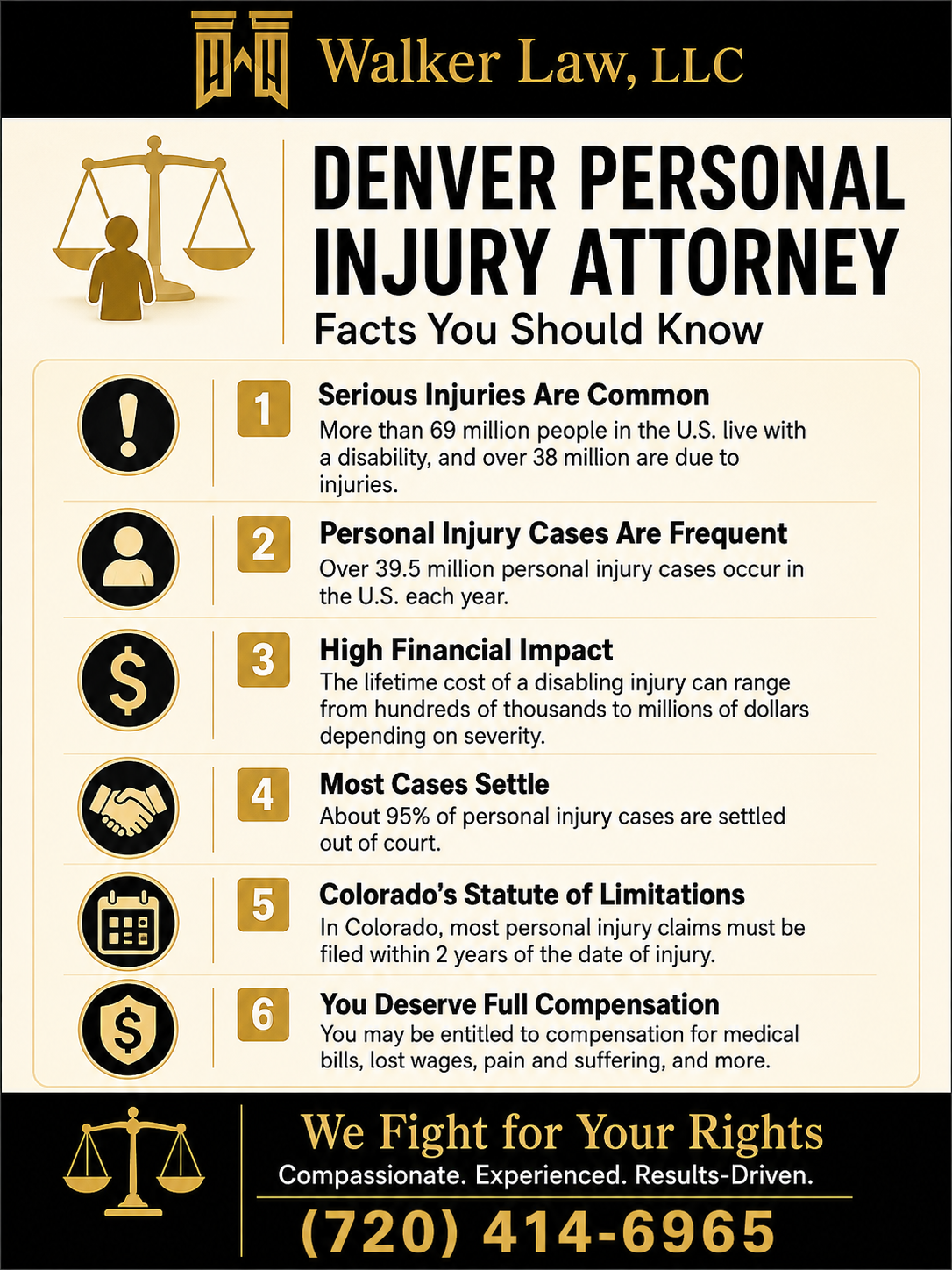
Colorado law imposes strict deadlines, known as statutes of limitations, for filing personal injury claims. Missing these deadlines can permanently bar recovery, regardless of the strength of the case.
In most personal injury cases in Denver, the statute of limitations is:
However, there are important exceptions.
For motor vehicle accidents in Denver, including car, truck, motorcycle, pedestrian, bicycle, and rideshare crashes, the deadline is generally:
Wrongful death claims in Colorado typically must be filed within:
Additional rules may apply in cases involving government entities, minors, or delayed discovery of injuries. A Denver personal injury attorney carefully analyzes the applicable deadline to ensure compliance.
Although these time limits may seem generous, waiting can weaken a case. Evidence may disappear, surveillance footage may be erased, and witnesses’ memories may fade. Consulting a Denver personal injury lawyer as soon as possible after an accident helps preserve critical evidence.
Prompt legal action also allows for early communication with insurance companies in Denver, reducing the risk of damaging statements or unfair settlement tactics.
The steps you take immediately after an accident can significantly affect your personal injury claim. A Denver personal injury attorney often sees cases where early mistakes complicate recovery.
If you are injured in Denver, consider the following steps:
Insurance companies often contact injured individuals quickly after an accident in Denver. Their goal is to settle claims efficiently and at minimal cost. A knowledgeable Denver personal injury lawyer manages communication with insurers and prevents tactics designed to reduce compensation.
Taking the right steps early can significantly strengthen your case and improve your chances of securing full recovery.
Successfully resolving a personal injury case in Denver requires more than filing paperwork and negotiating with insurance companies. Strong cases are built through detailed investigation, strategic planning, and readiness for trial.
At Walker Law LLC, every Denver personal injury attorney case begins with a thorough evaluation of the facts. This process often includes:
In complex cases in Denver, expert testimony may come from:
Because insurance companies carefully evaluate risk, preparation is critical. A Denver personal injury lawyer who prepares each case as if it may proceed to trial is often in a stronger position during settlement negotiations.
Jason Walker brings meaningful courtroom experience to every case. Having tried numerous cases to verdict, he understands how juries in Denver and throughout Colorado evaluate liability and damages. This trial-tested approach allows Walker Law LLC to pursue full compensation rather than accepting inadequate settlement offers.
Unlike large firms that may handle high volumes of cases, Walker Law LLC maintains a focused caseload. Clients in Denver work directly with Jason Walker throughout the legal process. This hands-on representation ensures consistent communication and detailed attention to every aspect of the claim.
From initial consultation through resolution, a Denver personal injury attorney at Walker Law LLC works to protect your interests and position your case for the strongest possible outcome.
Choosing the right attorney after an accident in Denver can significantly impact your recovery. Insurance companies and corporate defendants often retain experienced defense counsel. Injured individuals deserve representation that is equally prepared and strategic.
Walker Law LLC offers several key advantages to clients in Denver and across Colorado:
Personal injury cases in Denver are rarely simple. Liability may be disputed, damages may be challenged, and insurance companies may attempt to minimize compensation. A seasoned Denver personal injury attorney anticipates these challenges and prepares accordingly.
Walker Law LLC represents injury victims throughout Denver and the surrounding metro area with professionalism, discipline, and commitment to full accountability under Colorado law.
If you or a loved one has been injured in an accident in Denver or anywhere in the surrounding metro area, you may have the right to pursue compensation under Colorado law. Acting promptly helps preserve evidence and protect your legal claim.
Walker Law LLC offers free consultations to injury victims throughout Denver and across Colorado. During your consultation, a Denver personal injury attorney will review the details of your case, explain your legal options, and outline the next steps.
To speak with an experienced Denver personal injury lawyer, call Walker Law LLC at (720) 414-6965 or contact our firm online to schedule your consultation.
When negligence causes serious harm, protect your rights with a trusted Denver personal injury attorney committed to advocating for injury victims throughout Colorado.
Reviewed for legal accuracy by Jason Walker on September 22, 2026
A pain journal can help document symptoms and limitations that may not be fully reflected in medical bills or test results. Someone pursuing a personal injury claim in Denver can record pain levels, sleep disruption, medication side effects, missed activities, and difficulties performing everyday tasks. Entries should be accurate, dated, and written in ordinary language rather than exaggerated for the case. Because journals may become evidence, a Colorado attorney may advise the injured person to assume that an insurer or opposing lawyer could eventually read them. A consistent journal can help connect the medical diagnosis to the ways the injury affects work, family responsibilities, recreation, and quality of life.
Public and private social media content may become relevant when an insurance company investigates a personal injury claim. Photos, videos, location tags, comments, and activity updates can be taken out of context to dispute pain or physical limitations in a Denver case. Changing privacy settings may reduce casual access, but it does not guarantee that existing content will remain unavailable during litigation. Deleting posts after a claim begins may also create legal or evidentiary problems, so it is important to speak with an attorney before removing material. The safest practice is usually to avoid discussing the accident, injuries, medical treatment, negotiations, or daily activities online while the Colorado claim is pending.
Future medical expenses may be included when an injury is expected to require additional treatment after the claim is resolved. A personal injury attorney may use physician opinions, treatment recommendations, rehabilitation plans, and expert projections to estimate those costs. In a serious Denver case, the analysis may address future surgery, therapy, medication, medical equipment, home modifications, or long-term assistance. The calculation should account for the anticipated frequency and duration of care rather than relying only on current medical bills. Clear medical documentation is especially important because an insurance company may challenge whether proposed future treatment is necessary or related to the Colorado accident.
Colorado follows a modified comparative negligence rule, which means you may still recover compensation even if you were partly responsible for the accident. Your recovery may be reduced by your percentage of fault, but you can still pursue a claim if you are less than 50% responsible. A personal injury attorney can gather evidence, interview witnesses, and challenge unfair fault allegations made by insurers. Strong documentation and legal advocacy often make a significant difference during settlement negotiations. Speaking with a lawyer early can help protect your rights and improve your chances of a fair outcome.
Strong personal injury claims often include medical records, accident reports, photographs, witness statements, and proof of lost income. Video footage from nearby businesses or traffic cameras may also help establish how the accident occurred. Keeping records of medical appointments and following your treatment plan can demonstrate the extent of your injuries. An attorney can also work with experts when liability or damages are disputed. The more complete the evidence, the stronger your position during negotiations or litigation.
Yes, emotional distress may be included as part of your non-economic damages in a personal injury claim. Serious accidents can lead to anxiety, depression, post-traumatic stress, and other emotional challenges. Medical records, counseling documentation, and testimony from mental health professionals may help support these damages. Every case is different, and the value of emotional distress depends on the specific facts and evidence. An experienced attorney can evaluate how emotional harm fits into your overall claim.
In 2026, Colorado’s increased noneconomic damage limit may affect compensation for pain, suffering, emotional distress, and reduced quality of life in qualifying personal injury cases. For many civil actions accruing or filed after January 1, 2025, the general limit increased to $1.5 million, although different rules apply to wrongful death and medical malpractice claims. Economic damages, such as medical expenses, lost wages, and reduced earning capacity, are generally evaluated separately from this noneconomic limit. The applicable amount can depend on when the claim accrued, when the lawsuit was filed, and the legal category of the case. A Denver personal injury attorney can determine which 2026 limits and exceptions apply to the specific facts.
It is generally helpful to seek legal guidance before giving a recorded statement, signing a medical authorization, or accepting an insurance settlement. Early involvement allows an attorney to identify evidence that may disappear, including surveillance footage, vehicle data, incident reports, and witness information. A Denver personal injury claim may also involve multiple insurance policies, reimbursement demands, disputed fault, or future damages that are not immediately apparent. Waiting too long can make evidence harder to obtain and may place important Colorado filing deadlines at risk. To have the circumstances reviewed and learn what steps may protect the claim, contact us for a consultation.